
Mutual Funds
Mutual Funds Investment Plan for Beginners and mistakes to avoid
Getting started with investing? Mutual Funds for beginners feels like the perfect entry point. They are easy to understand and professionally managed. When it comes to long-term wealth creation, mutual funds are highly recommended.
Verse Credit09 Dec 2025, 09:49 pm
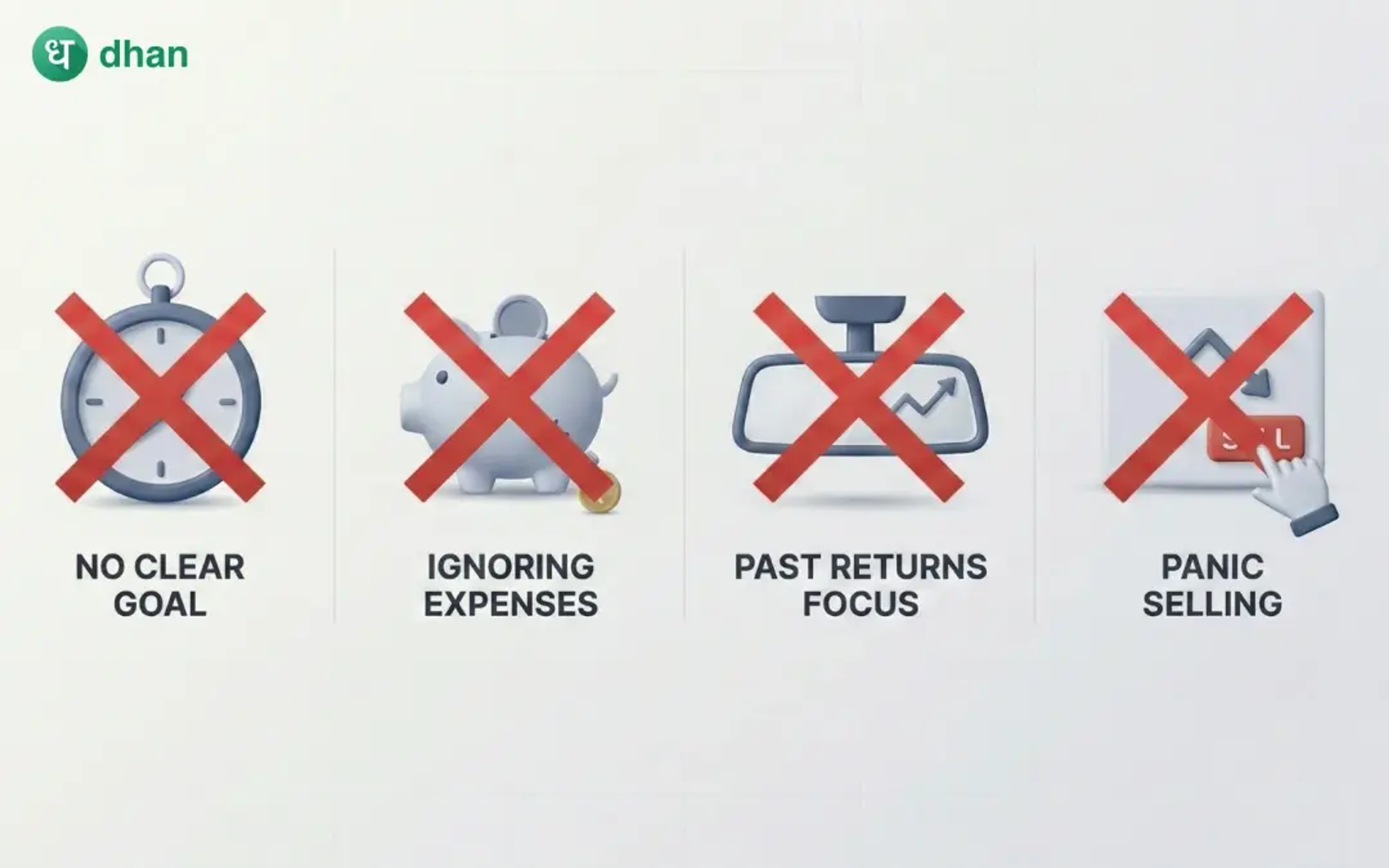
Table of Content
- Mistakes in mutual fund selection
- Timing mistakes that hurt long-term returns
- Portfolio building mistakes beginners must avoid
- How beginners can build a strong mutual fund foundation
- Conclusion
- FAQs
However, it’s the choice of your mutual fund where most investment mistakes begin. Many investors choose these funds out of excitement or even without understanding their risk appetite and goals. Many beginners also prioritize short-term returns and react emotionally to movements in the markets.
These behaviours erode the long-term returns significantly. In reality, you need patience and consistency to benefit from mutual funds. In this guide, we have comprehensively discussed the most common mistakes beginners make when they invest in mutual funds. With an informed approach, you can avoid these mistakes and align your decisions with your long-term goals.
Mistakes in mutual fund selection
While choosing mutual funds for beginners, you may end up investing in the wrong fund.
Choosing funds based only on past returns
As a beginner, you might choose a mutual fund simply because it performed well over the last few years. Of course, past returns show useful performance trends. However, they do not guarantee impressive performance in the future. Over time, the market leadership tends to change. A fund that tops the charts during a bull run may underperform during corrections.
A strong fund performs well during rallies as well as bear runs. Beginners must understand the concepts of consistency, investment strategy, and risk management. Steady compounding helps to grow your wealth over time.
Ignoring risk category and volatility
A certain level of risk comes with every mutual fund. Investors ignoring this risk often end up making poor decisions when markets turn volatile. Beginners often chase higher returns and choose mid-cap or small-cap funds. They overlook how sharply these funds tend to fluctuate.
When markets tumble, those who aren’t prepared mentally for volatility tend to panic. Eventually, they exit the funds at the wrong time. Therefore, it’s important to choose a fund that matches your risk tolerance. Even if a fund looks attractive in terms of returns, it may not suit your temperament. Often, this mental discomfort leads to costly emotional decisions.
Investing without understanding the objective of the fund
Sometimes, beginners fail to understand clearly what the fund is designed to achieve. They overlook terms like “growth,” “value,” “thematic,” or “ELSS”.
The investment objective of each fund is different. So is its asset allocation strategy. The time horizon also matters when you expect returns from a particular fund. While investing in mutual funds for beginners, failure to understand these details can lead to mismatches between expectations and outcomes.
For instance, thematic funds may deliver sharp gains but also carry higher risk. So, you must understand the purpose of a fund so that your investment is aligned with your goals and holding period.
Overloading on too many funds
As a beginner, you may have a misconception that investing in several mutual funds automatically results in better diversification. However, this often results in overlapping of holdings while diluting your returns.
For most beginners, a portfolio with five to seven carefully-selected funds is sufficient. Actual diversification comes from asset allocation and fund strategy. So, try to keep your portfolio simple, which helps in maintaining financial discipline when markets turn turbulent.
Timing mistakes that hurt long-term returns
Timing mistakes may affect long-term returns from mutual funds for beginners.
Waiting for the perfect market entry
Many investors keep looking for the “right time” to enter the market and eventually delay their investments. However, it is extremely difficult to consistently time the market. Often, markets move unpredictably. As you keep waiting, you miss out on the valuable time for compounding.
Investing in the long run is less about entry timing and more about time spent in the market. So, it’s important to start early and invest regularly rather than waiting for the perfect entry point.
Stopping SIPs during market corrections
Beginners often feel financially vulnerable during market corrections. Sometimes, they stop their SIPs out of fear. This is one of the most damaging mistakes in mutual fund investing.
In reality, Systematic Investment Plans work the best during dips in the markets. During these bearish phases, investors can accumulate a higher number of units at lower prices. You can use SIP calculator to check how much return you will get if you invest in SIP for a specific period of time. So, if you stop your SIPs during corrections, it deprives you of this averaging advantage. Those who continue to invest during downturns often benefit the most when markets recover. Therefore, it’s crucial to remain consistent and disciplined with mutual funds for beginners.
Panic selling during volatility
When you invest in equity, be prepared for volatile markets. However, beginners often consider short-term declines as permanent losses. They end up with panic selling when the market falls. This results in losses, and prevents them from reaping the financial benefits when the market recovers.
Historically, the money market has rewarded patience. So, try not to sell out of fear when markets are down, as it will affect your long-term returns.
Investing without a time horizon
As a beginner, you may lack clarity regarding how long you want to stay invested. Often, it gives you unrealistic expectations. When markets dip temporarily, these expectations can amount to frustration.
There’s a specific time horizon associated with each type of mutual fund. For instance, equity funds need more time to smooth out volatility and compound. Unless your perspective is long-term, you can feel disappointed even with good investments. Be clear about your time horizon and make sure to stay invested through market cycles.
Portfolio building mistakes beginners must avoid
Now, here are some mistakes related to building your portfolio that you must avoid.
Lack of asset allocation
One of the major mistakes while choosing mutual funds for beginners is investing entirely in equity or low-risk instruments. You need a well-structured portfolio to balance stability and growth through proper asset allocation.
With equity, you enjoy long-term growth. Debt funds, on the other hand, provide stability and liquidity. You need a calculated mix of both these asset classes. Beginners ignoring asset allocation often experience higher volatility in their portfolios, leading to emotional stress. Even young investors can benefit from a small allocation to debt funds, particularly when market conditions are uncertain.
Overexposure to sectoral and thematic funds
Beginners are often attracted to sectoral or thematic funds. However, you must remember that these funds are cyclical in nature. Their performance heavily depends on specific economic conditions.
Therefore, overexposure to these funds increases the risk of concentration. For beginners, broad-based equity funds should be the major focus, with sectoral funds playing a small role.
Ignoring rebalancing over time
The portfolio allocation naturally drifts as markets rise or fall. After long bull runs, portfolios with higher equity exposure tend to become riskier. On the contrary, conservative portfolios may underperform during growth phases.
With timely rebalancing, you can restore the original asset allocation. Make sure to adjust your investments periodically to manage risks and stay aligned with your goals. Beginners often ignore rebalancing, which can throw their investment journey off track.
Not increasing investments as income grows
Many investors start SIPs, but never increase the amount even when their income grows. This limits the scope of creating wealth over the long term. Step-up SIPs help investors gradually increase their contributions in line with salary hikes or better cash flows.
Over time, small increases can significantly boost your corpus. If you ignore step-ups, you’re missing out on one of the most effective strategies for wealth building.
How beginners can build a strong mutual fund foundation
You must have proper clarity as you prepare to invest in mutual funds for beginners.
Clearly define your financial goal, which may be buying a house, funding the education of your kids, or planning your retirement. Now, you need to match each goal with an appropriate time horizon and fund category.
SIPs help you maintain discipline during investments. You can also prevent emotional decision-making. Make sure to keep your portfolio simple and avoid overlaps.
Conclusion
When it comes to choosing mutual funds for beginners, discipline matters more than perfection. Most beginners struggle because of these avoidable mistakes in fund selection, timing, and the structure of their portfolios. It’s not that the funds they choose are bad, but it’s more about how they handle these funds through market cycles.
FAQs
How many mutual funds should a beginner start with?
If you’re a beginner, start with three to five funds across equity and debt categories.
Is it risky to invest in mutual funds during market highs?
It’s risky to invest a lump sum amount when the market is high. However, with SIPs, investors aren’t exposed to this risk as the unit costs are averaged over time when the market comes down.
Should beginners invest in sectoral mutual funds?
Sectoral funds come with higher risks. So, beginners must initially avoid them. Instead, focus on diversified equity funds before exploring specialised themes.
How often should I review my mutual fund portfolio?
Usually, annual reviews are perfect. If you monitor your portfolio too often, it can lead to emotional decisions.
Can beginners lose money in mutual funds?
Yes, short-term losses are possible in volatile markets. However, disciplined long-term investing significantly reduces the risk of permanent loss.