Mutual Funds
How to invest in mutual funds in 2026
Confused about mutual funds in 2026? Learn how to start investing step by step, choose the right funds, manage risk, and build long-term wealth.
Verse Credit17 Feb 2026, 04:33 pm
Table of Content
- Why invest in mutual funds in 2026
- How to invest in mutual funds?
- Common mistakes beginners should avoid in 2026
- Final thoughts
- FAQs on Mutual Funds 2026
The popularity of mutual funds lies in diversification, professional fund management, and a disciplined approach to investing. As a new investor, the market can feel overwhelming. Often, you find yourself in a dilemma while trying to choose from hundreds of schemes. Market volatility and constant updates on social media further add to your confusion. Therefore, investors must understand how they should channel their contributions into mutual fund schemes.
With the right approach, mutual fund investing helps you participate in the market growth without having to track stocks daily.
In this comprehensive guide, we have explained how you must invest in mutual funds in 2026.
Why invest in mutual funds in 2026
Mutual funds help you diversify your portfolio, but you do not need to choose individual stocks. Professional fund managers are responsible for conducting research, allocating capital and managing risk. Naturally, mutual funds appeal to beginners as well as seasoned investors.
If you’re keen to know how to invest in mutual funds, you must focus on:
- Long-term goals and not short-term profits
- Automate your investments through SIPs
- Investments in low-cost options like index funds
- Diversifying your portfolio instead of concentrating on certain stocks
You may have different goals, like retirement, buying a home, or creating wealth over the long term. With mutual funds, you gain flexibility across different risk levels and time horizons. Accordingly, you can adjust your investment styles through mutual fund schemes.
How to invest in mutual funds?
Here’s how to invest in mutual funds through a popular platform like Dhan.
Get the basics ready before investing
It’s crucial to set the foundation right before you invest in mutual funds.
Complete your KYC
First, you need to complete your KYC (Know Your Customer), which is mandatory as you invest in mutual funds. This includes:
- Verifying PAN Card
- Aadhaar verification
- Linking a bank account
Once the KYC is complete, you can invest across different fund categories.
Choose a reliable investment platform
Most investors use digital platforms like Dhan to invest directly in mutual funds. Choose a convenient platform that provides:
- Clear information about funds
- Easy SIP setup
- Transparent reporting
Decide on the investment mode
Investors can choose two modes as they invest in mutual funds. These are:
- SIP or lump sum
- Direct or regular plans
Usually, beginners benefit more from SIPs and direct plans as they ensure discipline and involve lower costs.
Identify your financial goals
With proper goals in place, your investments gain a proper direction. There’s no point investing randomly based on emotions.
First, list your goals and timelines.
- Retirement planning: 15-30 years
- Children’s education: 10-15 years
- Home purchase: 5-10 years
- Wealth creation: 10+ years
As an investor, you need a different approach for each goal. Long-term goals can handle more equity exposure. On the contrary, investors need balance and stability as they approach medium-term goals.
Understand your risk profile
As you understand how to invest in mutual funds, it’s essential to know your risk profile. Most investors associate risks with market swings. However, it’s more about how you react to this volatility.
Your risk profile depends on:
- Age
- Stability of income
- Number of dependents
- Experience in investment
There’s also a difference between:
- Risk capacity, which determines the extent of risk you can afford
- Risk tolerance, which shows how much volatility you can emotionally handle
While an aggressive portfolio looks alluring on paper, it may lead to panic during market corrections. Therefore, honest assessment matters more than optimism.
Choose the right type of mutual funds
The choice of your mutual funds is a major decision. Here’s how to invest in mutual funds, choosing the right schemes from different categories.
Equity mutual funds
Equity funds invest primarily in stocks and are suitable for long-term goals.
- Large-cap funds make your portfolio more stable
- Flexi-cap funds allow dynamic allocation
- Mid and small-cap funds are more volatile, but they also offer higher growth
If you decide to invest in these mutual funds, they require patience and long holding periods.
Debt mutual funds
Debt funds invest in bonds and money market instruments. They are known for:
- Lower volatility
- More predictable returns
If you are a conservative investor or decide to remain invested for a shorter horizon, debt funds will be the ideal choice for you.
Hybrid mutual funds
With hybrid mutual funds, you invest in both equity and debt instruments.
- Beginners often go for aggressive hybrid funds.
- Balanced advantage funds adjust exposure dynamically.
- Multi-asset funds help you diversify your portfolio through gold or other assets.
These funds are beneficial for investors who prioritise growth with low volatility.
Index funds & ETFs
Index funds track certain market indices. They involve low cost and a transparent structure. In 2026, index funds continue to grow in popularity. They are suitable for investors who want to grow their wealth over the long term without actively selecting funds.
Evaluate mutual funds before investing
When you evaluate how to invest in mutual funds, make sure not to choose a scheme based solely on past performance. Instead, check for:
- Consistency in returns over full market cycles
- Expense ratio, particularly for long-term investing
- Stability and philosophy of the fund manager
- Diversification of the portfolio and concentration risks
- Risk metrics to understand volatility and drawdowns
A good fund remains consistent across several years, even though it doesn’t emerge as the best fund in a certain year.
Decide how much to invest and start
Start with any amount you feel comfortable with. Your goal is to remain consistent with your investments. Some funds on Dhan allow you to get started with as low as INR 100. Here are a few valuable tips:
- Begin small if needed
- Use SIPs to automate investing
- Increase your contributions gradually as your income grows
- Don’t stop your SIPs when markets correct
For investors, it’s more important to remain invested rather than timing the market.
Monitor, review, and rebalance periodically
While investing in mutual funds through SIPs doesn’t require daily tracking, it’s not a “set and forget” strategy either. Therefore, review your portfolio once a year.
Also, rebalance your funds after major life changes. You may also decide to switch to a different fund if your present scheme consistently underperforms its benchmark. With rebalancing, your portfolio remains aligned with your goals and risk levels as your life evolves.
Common mistakes beginners should avoid in 2026
It’s not the poor selection of funds, but poor investment behaviour that hurts the returns for many investors. While you learn how to invest in mutual funds the right way, avoid the following:
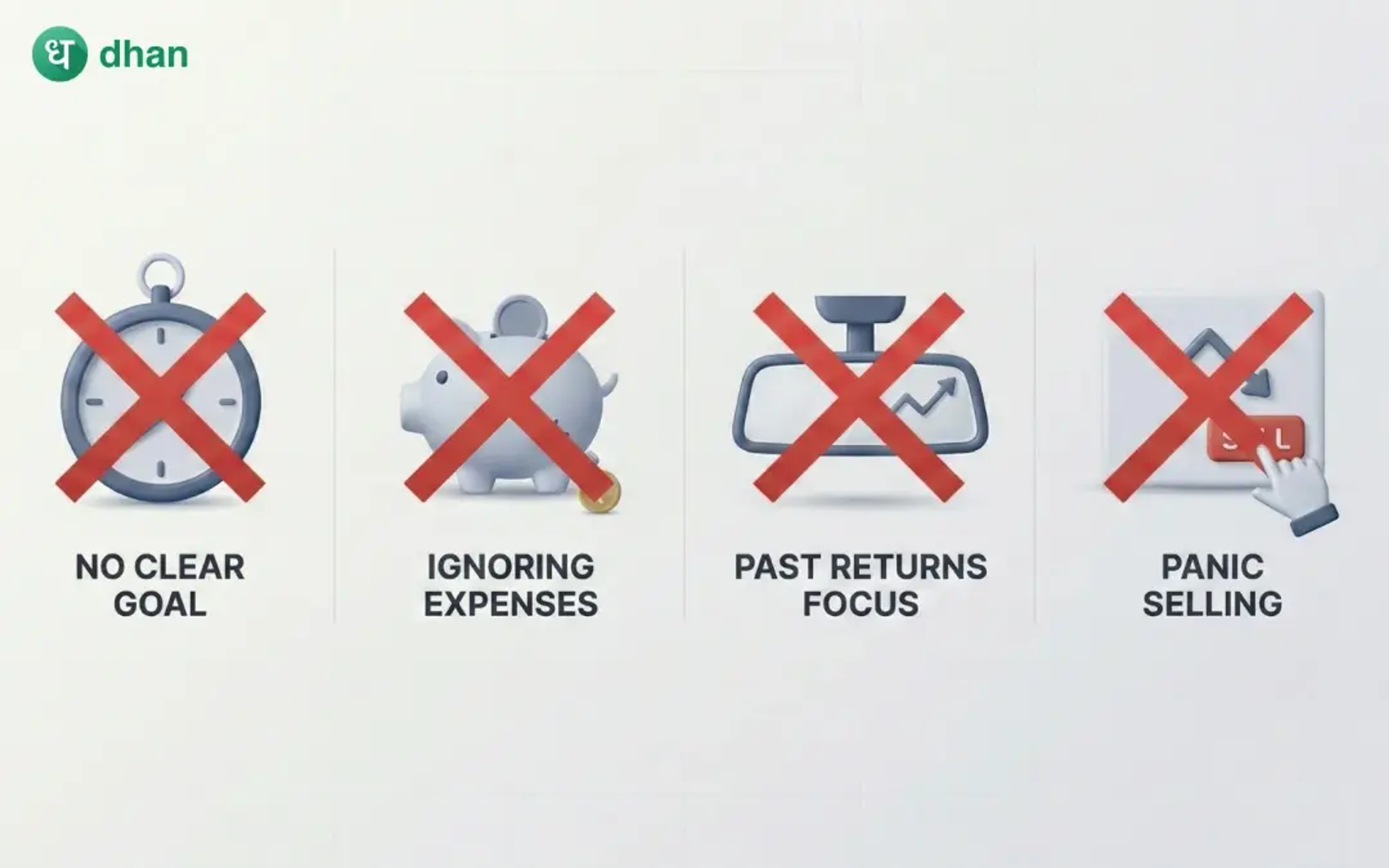
- Investing without clear goals
- Chasing funds that performed well only recently
- Holding too many overlapping schemes
- Panic selling during prolonged bear runs
- Ignoring costs and reviews
Successful investment is more about discipline than timing the market.
Final thoughts
Now that you know how to invest in mutual funds in 2026, you must approach it with the right structure and patience. When you choose the right funds based on your goals and risk profile, wealth creation becomes an achievable goal in the long run.
While investing in SIPs, you don’t need insider knowledge or constant monitoring. However, you need consistency and clarity in your decisions. Start early and stay invested to capitalise on the benefits of compounding.
FAQs on Mutual Funds 2026
Is 2026 a good year to start investing in mutual funds?
Yes. Market cycles will always exist, but when you start early, you enjoy the effect of compounding longer.
How many mutual funds should a beginner hold?
If you’re just getting started with mutual fund investments, choose 3-5 funds across different categories. Make sure that the underlying assets do not overlap.
Should beginners choose SIP or lump sum investing?
For beginners, SIPs are more convenient as they need to contribute a small amount periodically. They also reduce the risk of timing and help in building discipline automatically.
How long should I stay invested in mutual funds?
If you are investing in equity funds, try to stay invested for at least 5-7 years. With longer holding periods, you can improve the outcomes significantly.
Can I change funds later if my goals change?
Yes. Your portfolio should evolve at different stages of your life. However, avoid switching too frequently based on short-term movements in the market.